
Back when I was in high school, I saw Titanic in theaters seven times. That’s nearly a full 24 hours of Titanic screenings. I was already a Titanic buff before the movie came out. I’d read multiple books about the sinking of the Titanic and followed the news about the deep-sea expeditions to locate the wreckage. So I could pretend it was all driven by a budding scholarly interest—but if I’m being honest, I was also hopelessly in love with Leonardo DiCaprio.
I’ll save my full analysis of why the movie (and its leading man) resonated so deeply with fifteen-year-old me for another essay. But among the many scenes permanently seared into my brain, there’s one I’ve been thinking about a lot lately.
It’s the scene where Jack joins Rose and an assortment of first-class passengers for dinner. Gussied up in a borrowed tuxedo, with his normally windswept hair slicked back into something more presentable, he looks the part. Then he sits down and notices the intimidating array of forks, knives, and spoons laid out before him.
He knows exactly what’s at stake. One wrong fork, and the jig is up. His impostor status will be obvious to everyone at the table.
Then comes a quiet act of kindness. “Unsinkable” Molly Brown leans over and whispers, “Just start from the outside and work your way in.”
It’s the lifeline Jack needs. The moment of panic passes. He can stop worrying about the silverware and go back to charming his fellow diners.
So what does absurdly fancy cutlery have to do with Museumazing?
At some point, nearly all of us find ourselves in a place where we desperately want to belong but suddenly become aware that we don’t know the rules. We worry about saying the wrong thing, asking the wrong question, or revealing that we don’t really belong there after all.
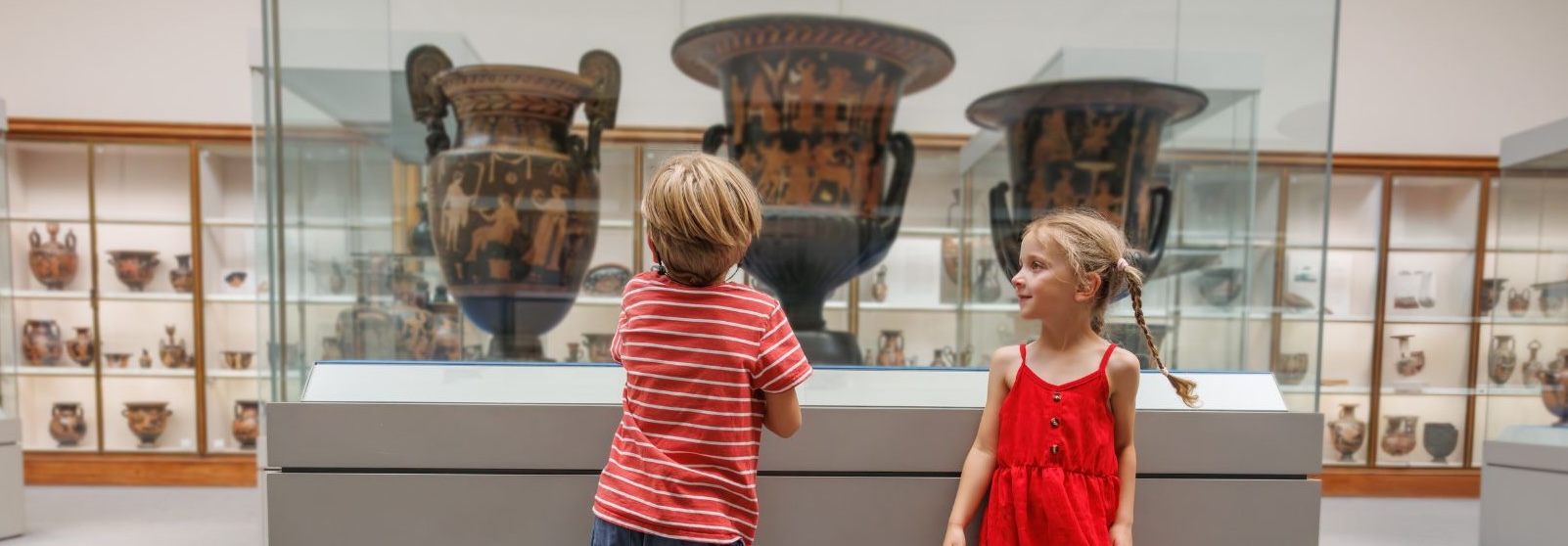
And unfortunately, I think many people have experienced at least a flash of that feeling in cultural spaces like museums.
I’m the daughter of a clown and a contortionist who wound up going to Yale. If anyone knows what it feels like to move between worlds, it’s me.
My parents weren’t your stereotypical circus performers living in a circus bubble. My love of museums, theater, and history came directly from them. They took my siblings and me to every affordable cultural experience they could find—from Shakespeare performed in a garden to quirky little exhibitions tucked away in university buildings. Those experiences are still among the brightest jewels in my treasure chest of memories.
But as wonderful and formative as they were, they weren’t always comfortable. I often felt like an interloper. A last-minute guest. I would try to watch the people around me to figure out how I was supposed to act.
Still, I loved those experiences enough to push through the discomfort. Somewhere along the way, I learned to simulate confidence. I learned how to look like someone who belonged. After all, my showbiz parents had also taught me the age-old performance trick: fake it ’til you make it.
And eventually, I did make it. I visited enough museums that I stopped worrying about whether I was following the “right” path through an exhibit. I quit wondering how I was supposed to look while looking at art and simply looked at the art. I let my imagination wander through history museums without worrying whether someone might think I was doing it wrong.
And then another realization hit me. I can’t be the only person who’s ever stepped into a museum and frozen for a moment, wondering if they’re about to grab the wrong fork.
Because here’s the thing: I love museums, but they’re not always easy places to love.
For every welcoming staff member, there’s a scowling security guard. For every breathtaking object, there’s a sign reminding you not to touch, not to stand too close, not to take pictures, not to speak too loudly.
None of those things are inherently bad. Museums have good reasons for many of those rules. But when you’re already unsure whether you belong, those little reminders can feel much larger than they are. They reinforce the quiet fear that everyone else knows the secret rules except you.
I saw this play out recently during a visit to a small museum. An enthusiastic docent, assuming I wanted a tour, immediately launched into an explanation of the artwork, built on the assumption that I couldn’t really understand it without guidance.
She meant well. As someone who’s comfortable in museums, I appreciated her enthusiasm without feeling discouraged. But I couldn’t help wondering how a less seasoned museum-goer might have experienced that interaction. Would they feel encouraged to explore the art themselves? Or would they leave more convinced that museums require specialized knowledge they don’t possess?
When I first started Museumazing, I thought my mission was to help people become more curious in museums. Now I think there’s something that comes first: Belonging.
It’s difficult—maybe impossible—for curiosity to bloom if we’re still wondering whether we’re allowed to be curious in the first place. When we’re preoccupied with whether we’re standing too close, asking a foolish question, interpreting something “incorrectly,” or looking out of place, our minds aren’t free to wander. They aren’t making connections, imagining possibilities, or discovering new ideas.
That’s not to say museums should always make us comfortable. Some exhibits should challenge us. Some stories should unsettle us. Some works of art should force us to wrestle with ideas we’d rather avoid.
But challenge and belonging aren’t opposites. In fact, I think belonging is what makes genuine challenge possible. Before we’re willing to question our assumptions, we need to believe we belong in the conversation. Before we’re willing to admit we don’t know something, we need to trust that not knowing is allowed.
Before curiosity comes belonging.
That’s the philosophy behind the Museumazing Discovery Deck. I didn’t create it to teach people the “right” way to visit a museum. I created it to remove that question altogether.
The prompts aren’t meant to test your knowledge or guide you toward the “correct” interpretation. They’re gentle invitations to notice, imagine, connect, and reflect. They shift your attention away from, Am I doing this right? and toward, I wonder…
The cards are designed for kids, but if I’m honest, they’re just as much for adults. Sometimes it’s the adults who are carrying around the biggest collection of invisible rules. Sometimes they’re the ones who need permission to slow down, trust themselves, and follow their own curiosity.
In some ways, I’ll probably always be a misfit. I’m good with that. And I think that’s why I’m primed to notice the ways people hesitate when entering unfamiliar spaces. They swallow the question they wanted to ask. They glance around to see what everyone else is doing. They stiffen up. They wonder if they belong.
And maybe that’s why I keep thinking about Jack at that dinner table.
It wasn’t really about the cutlery. It was about the fear that one wrong move would reveal he wasn’t supposed to be there.
I don’t want anyone standing in front of a painting, a fossil, or an ancient arrowhead feeling that same fear.
I want them to be wondering about the story the painting tells. They should be thinking about the creature that became the fossil, or imagining the lives of the people who used that arrowhead to hunt for food.
I want every person who walks through a museum’s doors to hear this message: You belong here.
Look a little longer. Ask the question you worry will make you sound dumb. Share the wacky ideas your mind has wandered to connect.
This museum is yours, too. That’s what Museumazing has always been about.
Leave a Reply