
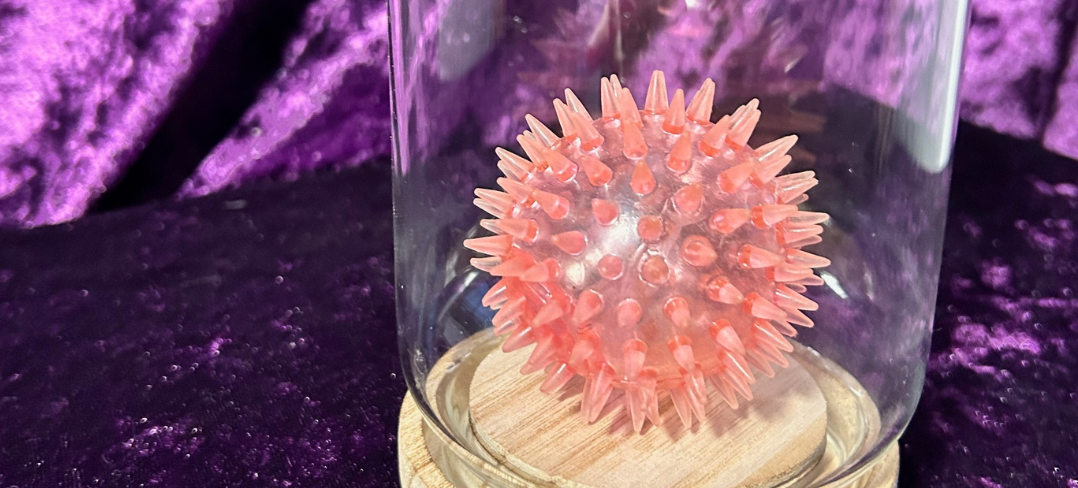
Over on Instagram, I just launched a new series called The Museum of Everything.
The idea is wonderfully simple: take an everyday object, present it just a little differently, and see it in a new way.
Not as background noise.
Not as junk to throw in a drawer.
Not as something to use and move past.
But as something worth noticing.
The first featured object: a tomato. Not an heirloom tomato or a special tomato. Just a tomato that was left in the bowl on the counter.

When you give ordinary things a tiny bit of ceremony—when you place them under glass, or frame them like they belong—they ask you to pause. To look again. And often, to wonder.
You can head over to Instagram to see the series as it grows. Share the photos with your kids. See what they notice. You might be surprised by what comes up when something familiar becomes just a little bit special.
But even better?
You can start your own Museum of Everything at home.
The Simple Set-Up
Here’s what I used:
Two glass containers I found on clearance at a home goods store for under $12 total. (Plus a purple velvet tablecloth I bought for a trunk-or-treat event last Halloween, just to be a little fancy.)


Turned upside down, they became instant “exhibit cases.”
A traditional glass cloche works beautifully too—but you don’t need anything fancy. A bowl, a jar, even a designated spot on a shelf can do the trick.
What matters is not the object itself, but the signal you’re sending: This is worth a second look.
Place your “exhibit” somewhere with decent light, where people will naturally pass by. A kitchen counter, a side table, a windowsill.
That’s it. Your museum is open.
What Goes in the Museum?
Anything. Truly.
A piece of fruit.
A LEGO creation.
A favorite pen.
A kitchen tool.
A leaf from the backyard.
A shell from a visit to the beach.
If it fits in your “exhibit space,” it belongs.
You can add a title on a “museum label” sticky note if you’d like. It’s not necessary, but I highly recommend this. Titles have a way of making things feel official—and often a little funny. And your stack of sticky notes become a journal of your shared efforts as museum-makers.
Then invite your family to take turns choosing the featured object of the day.
How to Explore Your Exhibit
This is where the Museumazing Mindset comes in.
You don’t need a script. Just a few gentle prompts to help you go a little deeper:
Look closely
What do you notice that you didn’t see at first glance?
Tiny details, textures, colors, or imperfections?
Make connections
What does this remind you of?
What other objects does it belong with—or feel surprisingly similar to?
Shift perspectives
Why do you think this object was chosen?
What might someone else notice that you don’t?
Find yourself
What do you like (or not like) about this object?
What does your reaction say about you?
You can do this at dinner, or while passing through the kitchen. You can spend one minute or five minutes. The goal is just a quick breath or reflection in the midst of a busy day.
No big setup. No pressure to have the “right” answer.
Just noticing, wondering, and connecting.
What You Might Discover
Some days, your object will spark something thoughtful.
Some days, it will make everyone laugh.
Some days… you might all feel a little stumped.
But even that has value.
Because what you’re really building isn’t just a collection of objects.
You’re building a habit:
Of paying attention.
Of being curious.
Of finding meaning in the midst of ordinary life.
And those small moments—those tiny shifts in how you see—have a way of sticking with you.
Your Invitation
So what are you waiting for? Start your own Museum of Everything.
Open it on your kitchen counter, or a shelf, or a sunny windowsill.
Let it be simple. Let it be imperfect. And then see where it leads you.
Because sometimes, the most basic object can be all you need to open the door to a beautiful moment of curiosity and connection.